Congratulations on your pregnancy! As you prepare to welcome your little one, one question often comes up during prenatal visits:
“Should I opt for a normal delivery or a C-section?”
It’s a common concern for many expectant mothers. While friends, family, and social media may offer countless opinions, the truth is that every pregnancy is unique. Understanding both delivery methods can help you make informed decisions and approach childbirth with confidence.
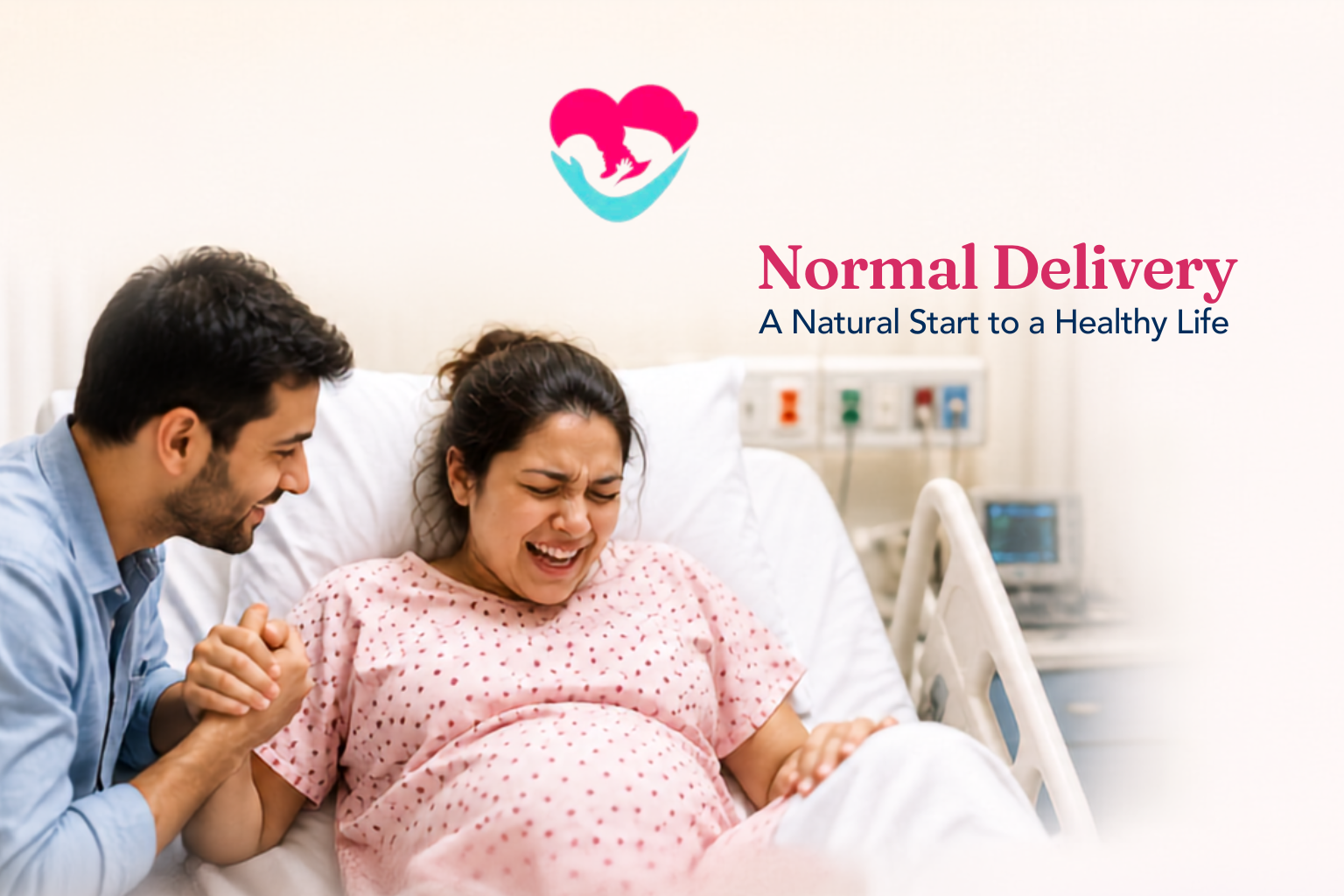
A normal delivery, also known as a vaginal birth, is the natural process of delivering a baby through the birth canal without surgical intervention.
Labor typically progresses through three stages:
Many women worry about labor pain, but modern obstetrics offers several pain-management options including epidural anesthesia, breathing techniques, and labor support methods.
Although labor can be physically demanding, many mothers appreciate the quicker recovery and natural birthing experience associated with vaginal delivery.
A Caesarean Section (C-Section) is a surgical procedure in which the baby is delivered through an incision made in the mother’s abdomen and uterus.
The procedure is usually performed under spinal or epidural anesthesia, allowing the mother to remain awake during the birth.
Scheduled in advance due to specific medical indications or pregnancy-related concerns.
Performed urgently when complications arise during labor that may affect the health of the mother or baby.
While C-sections are often life-saving procedures, they are major surgeries and should generally be performed when medically necessary.
For most healthy pregnancies, vaginal delivery offers several advantages.
Most women recover more quickly after a normal delivery and can resume routine activities sooner.
Hospital discharge often occurs within 24–48 hours after delivery.
Hormonal changes during labor help stimulate milk production and support early breastfeeding.
Passing through the birth canal helps remove fluid from the baby’s lungs, reducing breathing difficulties after birth.
Women who have normal deliveries generally face fewer complications in subsequent pregnancies compared to those with multiple C-sections.
Although generally safe, C-sections involve surgical risks that mothers should understand.
Repeated C-sections may increase the risk of:
Babies delivered via C-section, especially before 39 weeks, may have a slightly higher chance of temporary breathing difficulties and NICU admission.
There are situations where a C-section is the safest option for both mother and baby.
Common indications include:
In these circumstances, a C-section can significantly improve outcomes and reduce potential risks.
| Aspect | Normal Delivery | C-Section |
|---|---|---|
| Hospital Stay | 1–2 Days | 4–5 Days |
| Recovery Time | 1–2 Weeks | 6–8 Weeks |
| Pain After Birth | Mild to Moderate | Surgical Incision Pain |
| Breastfeeding | Usually Starts Earlier | May Be Delayed |
| Future Pregnancy Risks | Lower | Higher with Multiple Surgeries |
| Surgical Risks | Minimal | Present |
Yes. Many women are suitable candidates for VBAC (Vaginal Birth After Caesarean).
With proper evaluation and monitoring, VBAC can be a safe and successful option. Success rates range between 60% and 80% in appropriately selected patients.
If you have had a previous C-section, discuss your options early in pregnancy with your obstetrician.
For uncomplicated pregnancies, normal delivery is generally associated with fewer medical risks, faster recovery, and lower chances of complications.
However, there is no universal answer.
When medical conditions make vaginal birth unsafe, a C-section becomes the safest and most appropriate choice.
The goal is never to achieve a specific type of delivery—it is to ensure a healthy mother and a healthy baby.
Not necessarily. While normal delivery offers many benefits, certain medical situations require a C-section to ensure safety.
You can discuss your concerns with your doctor, but elective C-sections should be carefully considered due to the associated surgical risks.
Most women require 6–8 weeks for complete recovery, although individual healing times may vary.
Yes. Various pain-relief methods such as epidural anesthesia, breathing exercises, and labor support techniques can make labor significantly more comfortable.
Every pregnancy is different, and the best delivery plan depends on your health, your baby’s condition, and your pregnancy journey.
Dr. Tejashree Bakre, MS (Obgy), DNB (Obgy), FMAS, MRCOG (London, UK) is a highly experienced Obstetrician, Gynecologist, and Laparoscopic Surgeon in Mumbai, offering expert guidance for normal deliveries, high-risk pregnancies, VBAC counseling, and C-section management.
Whether you’re planning for a natural birth or need specialized care during pregnancy, Dr. Bakre can help you make informed decisions with confidence.
Book your pregnancy consultation today and take the next step toward a safe and healthy delivery.
Copyright © 2026 All Rights Reserved Website Design By DMXDIGITAL
WhatsApp us