Pregnancy changes a lot in your body. Some days it is back pain, some days it is nausea, and on other days you simply feel more tired than usual. Most of this is completely normal. But a few symptoms are your body’s way of telling you that something needs to be checked, and knowing the difference can protect both you and your baby.
Many women in India hesitate to call the doctor because they don’t want to bother anyone, or because an elder at home says it happens to everyone. If you have ever wondered whether a symptom is worth a phone call, this guide is for you. Below, we explain the warning signs during pregnancy that need medical attention, which ones mean you should go to the hospital straight away, and what you can do to stay safe.
Some pregnancy complications, such as preeclampsia, placental problems and preterm labour, can develop quickly. Getting checked early often prevents serious harm to the mother and baby, so it is always safer to see a doctor than to wait and watch.
Regular antenatal check-ups pick up many problems early, but symptoms can appear between visits. That is why it helps to know these signs at home, and to make sure your husband or family members know them too.
Contact your doctor or go to the hospital right away if you notice any of the following.
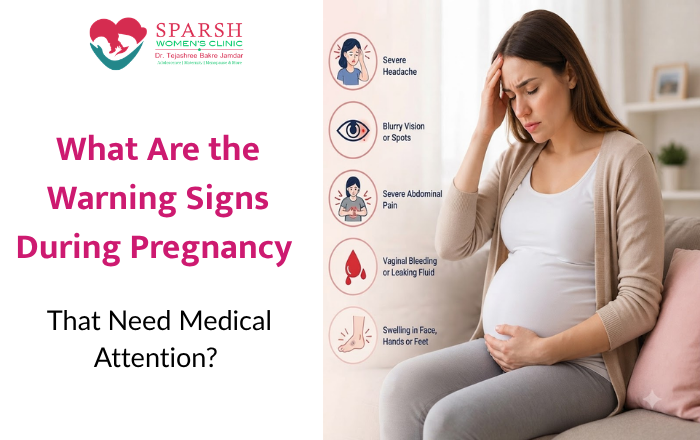
Light spotting can happen in early pregnancy, but it should always be reported. Heavy bleeding, bleeding with clots, or bleeding with cramps needs urgent care at any stage. In the first trimester it can point to a miscarriage or an ectopic pregnancy. Later in pregnancy, it can be a sign of a placental problem such as placenta previa or placental abruption.
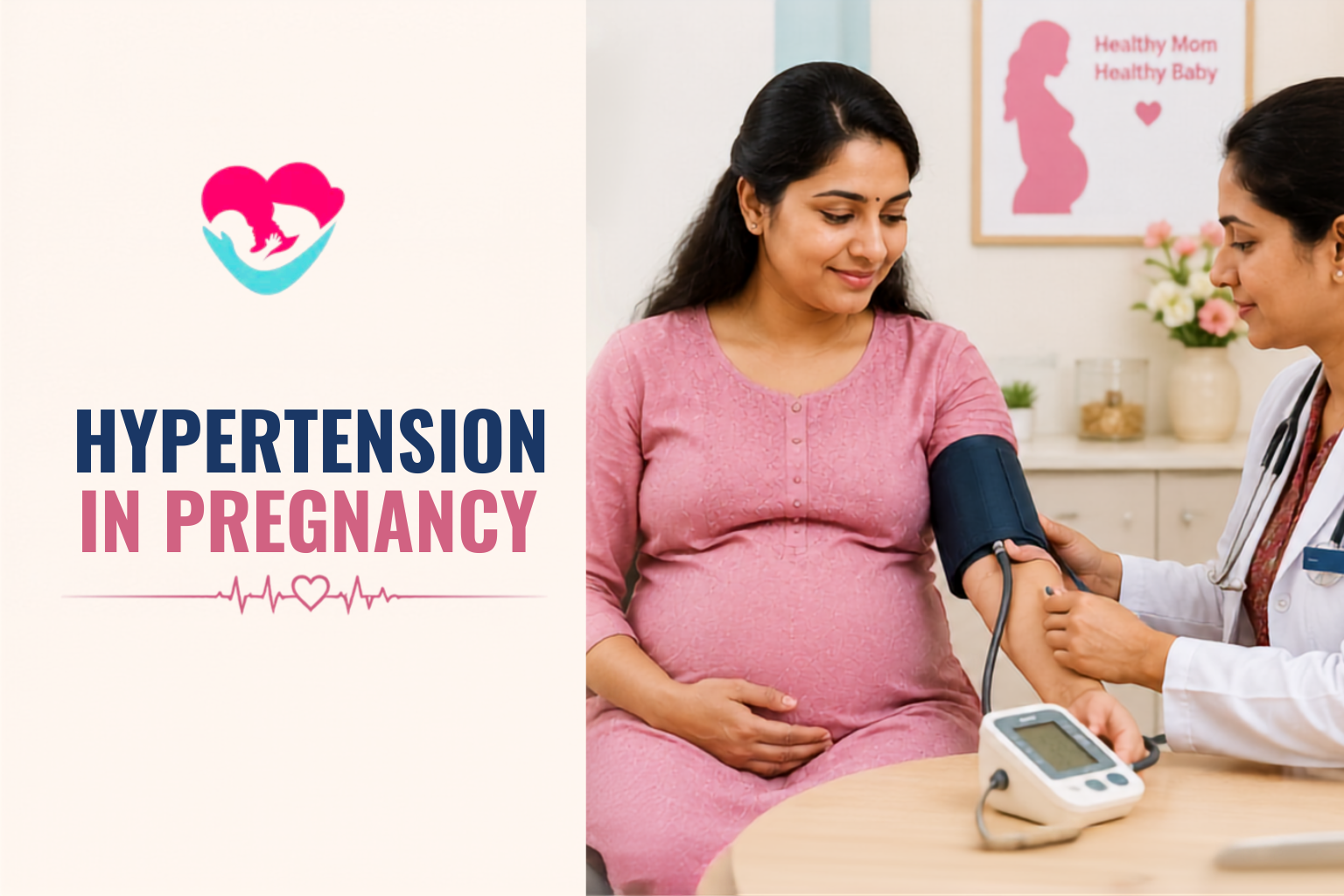
A headache that does not settle with rest, especially with blurred vision, flashing lights or sudden swelling of the face, hands or feet, can be a sign of preeclampsia. This is a serious form of high blood pressure that usually appears after 20 weeks. You can read more about it in our guide on hypertension in pregnancy.
Some swelling of the feet is common, particularly in the evening or during Mumbai’s hot and humid months. What matters is swelling that comes on suddenly or affects your face and hands.
By around 24 to 28 weeks, most mothers begin to notice a regular pattern of movements. If your baby is moving less than usual, or you cannot feel any movements, don’t wait until the next morning. Call your doctor or go to the hospital the same day. Lying on your left side for a little while is fine, but it should never delay getting checked.
Mild stretching or pulling as the uterus grows is normal. Sharp, constant or one-sided pain is different. In early pregnancy, it may suggest an ectopic pregnancy. Later on, severe pain with a hard or tender belly needs emergency care. Pain in the upper right side of the abdomen can also be linked to preeclampsia.
A sudden gush or a steady trickle of clear fluid may mean your waters have broken. If this happens before 37 weeks, or if the fluid is green, brown or foul smelling, go to the hospital immediately.
Tightening that comes at regular intervals, a dull lower backache that comes and goes, or pressure in the pelvis before 37 weeks could be signs of preterm labour. Occasional, irregular tightening (Braxton Hicks contractions) is common, but if you are not sure, get it checked.
A temperature of 100.4°F (38°C) or above should always be discussed with your doctor. Infections like urinary tract infection, dengue, malaria and typhoid are common in India, especially during the monsoon, and some can affect the pregnancy if not treated in time. Please avoid taking medicines on your own.
Feeling a little out of breath in the third trimester is normal. Chest pain, sudden difficulty in breathing, a racing heartbeat or fainting is not. These need emergency attention, as they can point to a blood clot in the lungs or a heart problem.
Swelling, redness, warmth or pain in one calf (not both) can be a sign of a blood clot in the leg, known as deep vein thrombosis. Pregnancy increases this risk, so get it checked without delay.
These may not always be emergencies, but they do need a call to your doctor or an early visit.
Go straight to the hospital, or call 108 for an ambulance, if you have heavy bleeding, fits (seizures), fainting, severe chest pain or breathlessness, your waters break, or your baby has stopped moving. Do not wait for a clinic appointment in these situations.
A practical tip: from the third trimester onwards, keep your hospital’s phone number, your antenatal file and a small bag ready. This saves precious time if you ever need to leave in a hurry.
Some women need closer monitoring during pregnancy. This includes women who:
If any of these apply to you, your doctor may suggest more frequent check-ups and tests. You can learn more about high-risk pregnancy care and how it is managed.
Blood pressure checks, urine tests, blood tests and scans can find problems before symptoms show up. These visits also help your doctor plan the safest way for your baby to be born, as we explain in Normal Delivery vs C-Section.
Once you start feeling regular movements, get to know when your baby is usually active. A change from that pattern is more important than any fixed number of kicks.
Iron, folic acid and calcium are routinely advised during pregnancy in India. Take them as your doctor suggests and don’t stop on your own.
You know your body better than anyone. If something feels wrong, it is always better to get checked and hear that everything is fine than to wait at home and worry.
1. What are the danger signs in pregnancy every mother should know?
The main danger signs are vaginal bleeding, a severe headache with blurred vision, sudden swelling of the face or hands, reduced baby movements, severe abdominal pain, leaking fluid, high fever, and chest pain or breathlessness. Any of these needs prompt medical attention.
2. Is spotting in early pregnancy normal?
Light spotting can happen in early pregnancy, sometimes around the time of implantation. Still, it should always be reported to your doctor, because bleeding can also be a sign of miscarriage or ectopic pregnancy. Heavy bleeding or bleeding with pain needs urgent care.
3. How do I know if my baby is moving less than normal?
Most babies settle into a regular pattern of movements in the later months. If you notice fewer movements than usual, or a change in that pattern, contact your doctor the same day. A change from your baby’s normal routine matters more than counting a fixed number of kicks.
4. Is swelling of the feet during pregnancy a warning sign?
Mild swelling of the feet and ankles is common, especially later in the day. It becomes a warning sign when it appears suddenly, affects the face or hands, or comes with a headache or vision problems, as these can point to preeclampsia.
5. When should I call my gynecologist during pregnancy?
Call your gynecologist whenever a symptom worries you, feels severe, or doesn’t go away. It is always better to ask and be reassured than to stay at home with a symptom that may need treatment.
Have questions? We’re just a message away! Contact us on WhatsApp: Click Here to Chat with Us
Every pregnancy is different, and a symptom that seems small can sometimes need a closer look. If you live in Mulund, Bhandup, Nahur or nearby areas and want guidance on any of these warning signs, you can consult Dr. Tejashree Bakre, Gynecologist & Obstetrician in Mulund West, Mumbai, with 14+ years of experience in pregnancy care, high-risk pregnancies and normal deliveries.
She is available at Maple Polyclinic, Elite Women & Child Care Hospital and Apex Hospitals in Mulund West, and Vedant Hospital in Bhandup West. Whether you need regular antenatal care or want a worrying symptom checked, a timely consultation can give you clarity and peace of mind. You can find all timings on our contact page.
In an emergency, please go to the nearest hospital directly.
Name – Dr. Tejashree Bakre, Gynecologist Obstetrician and Laparoscopic Surgeon
Address: 2nd Floor, Rohini Residency, Maple Polyclinic, Cabin D, 201, B Wing, MG Road, near Panch Rasta, Mulund West, Mumbai, Maharashtra 400080
Phone: 70455 63438
Dr. Tejashree Bakre is a consultant Obstetrician, Gynecologist, and Laparoscopic Surgeon practicing in Mulund & Bhandup, Mumbai, with over 14+ years of experience specializing in high-risk pregnancies, advanced minimally invasive surgeries, and comprehensive women’s healthcare.
Cabin D, 201, B Wing, 2nd Floor, Rohini Residency, M.G. Road, Near Panch Rasta, Mulund West, Mumbai – 400080.
3rd Floor Marathon Millennium Lal Bahadur Shastri Marg, besides, Nirmal Lifestyle Rd, Mulund West, Mumbai, Maharashtra 400080
B Wing, 1st Floor, Crosswinds CHSL, Pancharatna Society, Jangal Mangal Rd, opp. Sarvoday Nagar, Satyavijay Society, Gadhav Naka, Gate, Bhandup West, Mumbai, Maharashtra 400078
Tulsi Pipe line Road, Veena Nagar Phase-II, Veena Nagar, Mulund West, Mumbai, Maharashtra 400080
Copyright © 2026 All Rights Reserved Website Design By DMXDIGITAL
WhatsApp us