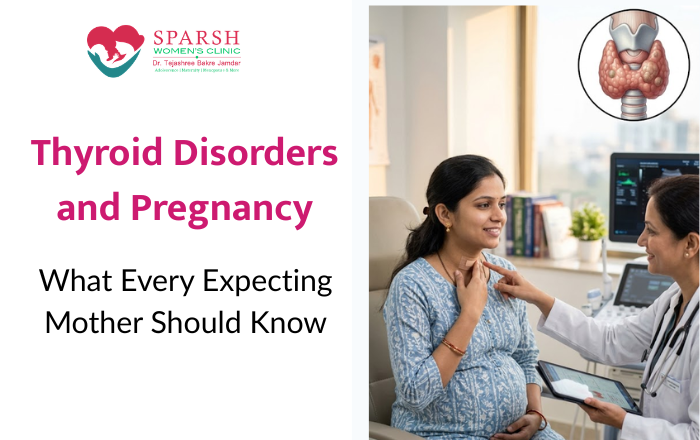
Somewhere between the excitement of a positive pregnancy test and the first ultrasound, a lot of women hear their doctor mention “thyroid levels” for the first time. It can feel like an unexpected detour. You’re already tracking cravings, fatigue, and a dozen new sensations, and now there’s a gland in your neck that suddenly matters a great deal.
Thyroid disorders and pregnancy are connected in ways that surprise a lot of first-time mothers. The thyroid gland produces hormones that influence nearly every system in the body, and during pregnancy, it has to work harder to support both the mother and the developing baby. When it doesn’t function the way it should, the effects can reach from the first trimester right through to delivery and beyond.
This guide walks through why thyroid health matters in pregnancy, what the common disorders look like, how they’re diagnosed and treated, and when it’s time to talk to a gynecologist about it.
The thyroid is a small, butterfly-shaped gland sitting at the base of the neck. It produces two main hormones, T3 and T4, which control how the body uses energy. When the gland produces too little hormone, it’s called hypothyroidism. Too much, and it’s hyperthyroidism. Both can occur before pregnancy or develop during it, and both change how a woman’s body and her baby’s grows and functions over the following months.
In early pregnancy, the baby depends entirely on the mother’s thyroid hormone supply, since the fetal thyroid gland isn’t fully functional until around week 12. This is the stage when the brain and nervous system are developing rapidly. If the mother’s thyroid output is off, even mildly, it can influence this critical window. Later in pregnancy, thyroid hormone continues to affect metabolism, weight regulation, and how well the placenta functions.
Pregnancy itself also changes thyroid demand. Hormones like hCG and estrogen shift thyroid hormone production and binding, which is why normal reference ranges for thyroid tests during pregnancy differ from those used outside of it.
| Feature | Hypothyroidism | Hyperthyroidism |
|---|---|---|
| Thyroid hormone level | Low | High |
| Common cause | Iodine deficiency, Hashimoto’s thyroiditis | Graves’ disease, excessive iodine, thyroiditis |
| Common symptoms | Fatigue, weight gain, cold intolerance, constipation | Rapid heartbeat, weight loss, heat intolerance, anxiety |
| Frequency in pregnancy | More common | Less common |
| Risk if untreated | Miscarriage, preterm birth, developmental delay | Preeclampsia, thyroid storm, low birth weight |
This is where things get tricky. Fatigue, mood swings, and changes in appetite are already part of a normal pregnancy, so thyroid problems while pregnant can hide in plain sight. Some signs that might point toward an underlying issue include:
None of these symptoms confirm a thyroid disorder on their own. That’s exactly why blood tests matter more than guesswork here.
Certain women are more likely to develop pregnancy thyroid disorders, including those with:
If any of these apply, it’s worth raising the topic early with your doctor rather than waiting for symptoms to show up.
Left unmanaged, hypothyroidism has been linked with anemia, preeclampsia, placental abruption, and postpartum hemorrhage. Hyperthyroidism, on the other hand, carries risks like heart strain, preeclampsia, and in rare severe cases, thyroid storm a medical emergency that needs immediate hospital care.
The developing baby relies on adequate maternal thyroid hormone, particularly in the first trimester. Studies have associated poorly controlled thyroid disorders with low birth weight, preterm birth, and in some cases, delays in cognitive development. This doesn’t mean every woman with a thyroid condition will face these outcomes — most don’t, especially with proper treatment — but it underlines why pregnancy complications due to thyroid issues are taken seriously by obstetric teams.
Diagnosis usually starts with a simple blood draw. Common tests include:
Doctors don’t rely on standard non-pregnant reference ranges here pregnancy has its own trimester-specific TSH ranges, which is why self-interpreting a report found online can be misleading.
Treatment depends entirely on the type and severity of the disorder, and there’s no single approach that fits every patient.
For hypothyroidism, levothyroxine is the standard treatment and is widely considered safe throughout pregnancy when dosage is monitored appropriately. For hyperthyroidism, doctors may prescribe propylthiouracil in the first trimester and switch to methimazole later, depending on the clinical picture. Dosages are adjusted based on regular blood work rather than fixed at a single level for the whole pregnancy.
It’s worth repeating: no treatment decision here should be made without a qualified healthcare professional reviewing your specific reports and history.
Iodine plays a direct role in thyroid hormone production, and pregnancy increases iodine requirements. Good dietary sources include iodized salt, dairy, eggs, and seafood, though supplementation should only be started on a doctor’s advice rather than self-prescribed. Selenium and adequate protein intake also support thyroid function, but no diet replaces medical treatment when a disorder is already present.
Women with a known thyroid disorder typically need thyroid function tests every four to six weeks, or more frequently if dosage changes are being made. This monitoring usually continues through delivery and into the postpartum period, since hormone requirements shift again once the baby arrives.
Yes, in most cases. With early diagnosis, consistent medication, and regular monitoring, the majority of women with thyroid disorders go on to have uneventful pregnancies and healthy babies. The key factor is catching it early and staying consistent with follow-up visits rather than treating it as a one-time fix.
Some women develop postpartum thyroiditis within the first year after delivery, even without a prior thyroid history. It can present as a temporary hyperthyroid phase followed by hypothyroidism, or either one alone. Symptoms like persistent fatigue or mood changes after delivery are often dismissed as “just new-mother exhaustion,” so it’s worth flagging them to your doctor rather than assuming they’ll pass on their own.
Any pregnant woman with a personal or family history of thyroid disease should mention it at her first prenatal visit. Beyond that, symptoms like a racing heartbeat, unexplained weight loss, severe fatigue, or visible neck swelling deserve prompt evaluation rather than a wait-and-watch approach. For those planning a pregnancy with an existing thyroid condition, a pre-conception consultation with a thyroid specialist for pregnancy in Mumbai or a gynecologist can help set a stable baseline before conception.
Seek immediate medical attention for a high fever with rapid heartbeat and confusion, severe chest pain, difficulty breathing, or signs of a possible thyroid storm. These are rare but require emergency care, not a routine appointment.
If you have a known thyroid condition, a family history of thyroid disease, or symptoms that don’t quite fit “normal pregnancy tiredness,” it’s reasonable to get checked rather than wait it out. Women managing what’s considered a high-risk pregnancy thyroid condition benefit from closer, more frequent monitoring throughout the pregnancy. A gynecologist or obstetrician can coordinate thyroid testing alongside routine prenatal care, so nothing falls through the gaps.
Dr. Tejashree Bakre
Gynecologist & Obstetrician
Dr. Tejashree Bakre sees patients for prenatal care, high-risk pregnancy management, and thyroid evaluation during pregnancy at the following locations:
If you’re pregnant, planning a pregnancy, or dealing with a thyroid condition and unsure what it means for your pregnancy, it may help to speak with a gynecologist in Mulund West Mumbai who can review your reports and guide next steps. Booking a consultation early even before symptoms appear often makes monitoring simpler down the line.
1. Can hypothyroidism affect my chances of getting pregnant?
Yes, uncontrolled hypothyroidism can interfere with ovulation and menstrual regularity, making conception harder. Once thyroid levels are stabilized with treatment, fertility often improves. Women trying to conceive with a known thyroid condition should get their levels checked before attempting pregnancy.
2. Is it safe to take thyroid medicine while breastfeeding?
Yes, levothyroxine and most anti-thyroid medications prescribed postpartum are generally considered compatible with breastfeeding. Dosages may still need adjustment after delivery. Always confirm the specific medication and dose with your doctor rather than assuming based on pre-pregnancy prescriptions.
3. Will my baby be born with a thyroid problem if I have one?
Not necessarily. Most babies born to mothers with treated thyroid disorders have normal thyroid function. Newborn screening typically checks thyroid levels shortly after birth as a standard precaution, regardless of the mother’s history.
4. How soon should thyroid levels be checked after finding out I’m pregnant?
Ideally at your first prenatal visit, especially if you have risk factors or a prior thyroid history. Early testing allows time to adjust medication before it affects the critical first-trimester period of fetal brain development.
5. Can stress cause thyroid problems during pregnancy?
Stress alone doesn’t cause thyroid disease, though it can worsen symptoms in someone already predisposed. Thyroid disorders are primarily driven by autoimmune, genetic, or iodine-related factors rather than stress by itself.
Have questions? We’re just a message away! Contact us on WhatsApp — Click Here to Chat with Us
Dr. Tejashree Bakre is a consultant Obstetrician, Gynecologist, and Laparoscopic Surgeon practicing in Mulund & Bhandup, Mumbai, with over 14+ years of experience specializing in high-risk pregnancies, advanced minimally invasive surgeries, and comprehensive women’s healthcare.
Cabin D, 201, B Wing, 2nd Floor, Rohini Residency, M.G. Road, Near Panch Rasta, Mulund West, Mumbai – 400080.
3rd Floor Marathon Millennium Lal Bahadur Shastri Marg, besides, Nirmal Lifestyle Rd, Mulund West, Mumbai, Maharashtra 400080
B Wing, 1st Floor, Crosswinds CHSL, Pancharatna Society, Jangal Mangal Rd, opp. Sarvoday Nagar, Satyavijay Society, Gadhav Naka, Gate, Bhandup West, Mumbai, Maharashtra 400078
Tulsi Pipe line Road, Veena Nagar Phase-II, Veena Nagar, Mulund West, Mumbai, Maharashtra 400080
Copyright © 2026 All Rights Reserved Website Design By DMXDIGITAL
WhatsApp us